How to weigh an infrastructure promise before you pay for it
Every Pune sales conversation includes a metro, a flyover or a ring road. Some of them are running, some are sanctioned, and some are a line on a slide. Here is how to sort them.
Venkatesh Skydove Sales · 1 August 2026 · 6 min read
Nobody in Pune sells you an address. They sell you the address it is going to be, and the difference between the two is always some piece of infrastructure.
Most of those claims are true in the narrow sense and useless in the practical one. Sorting them takes about five minutes if you know the ladder.
The six rungs
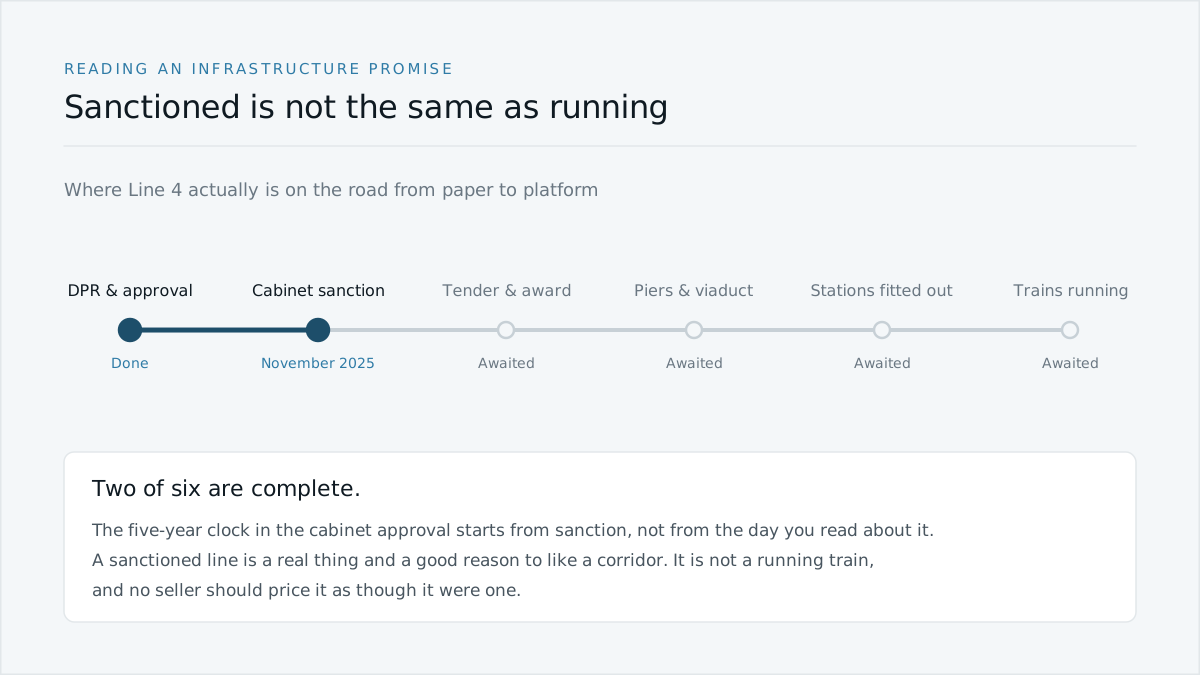
Proposed. It is in a study, a plan or a minister’s speech. Worth nothing to you today.
Detailed project report prepared. Somebody has costed and aligned it. Still no money.
Sanctioned. Approved with a budget. Real, and a genuine reason to like a corridor.
Tendered and awarded. A contractor is committed. This is where dates start to mean something.
Under construction. Structures exist. You can go and look at them.
Operational. The only rung you should pay a premium for.
Running the ladder on this corridor
Two claims get made about Sinhagad Road, and they sit on different rungs.
The flyover: rung six
A 2.6 km double flyover from Rajaram Bridge to Fun Time Theatre opened on 1 September 2025, built by the Pune Municipal Corporation at ₹118.37 crore. Six signals removed. It is finished, open and you can drive it this afternoon.
That is a claim you can pay for, because you receive the benefit on the day you move in. Detail in the piece on the flyover.
Metro Line 4: rung three, with a foot on rung five
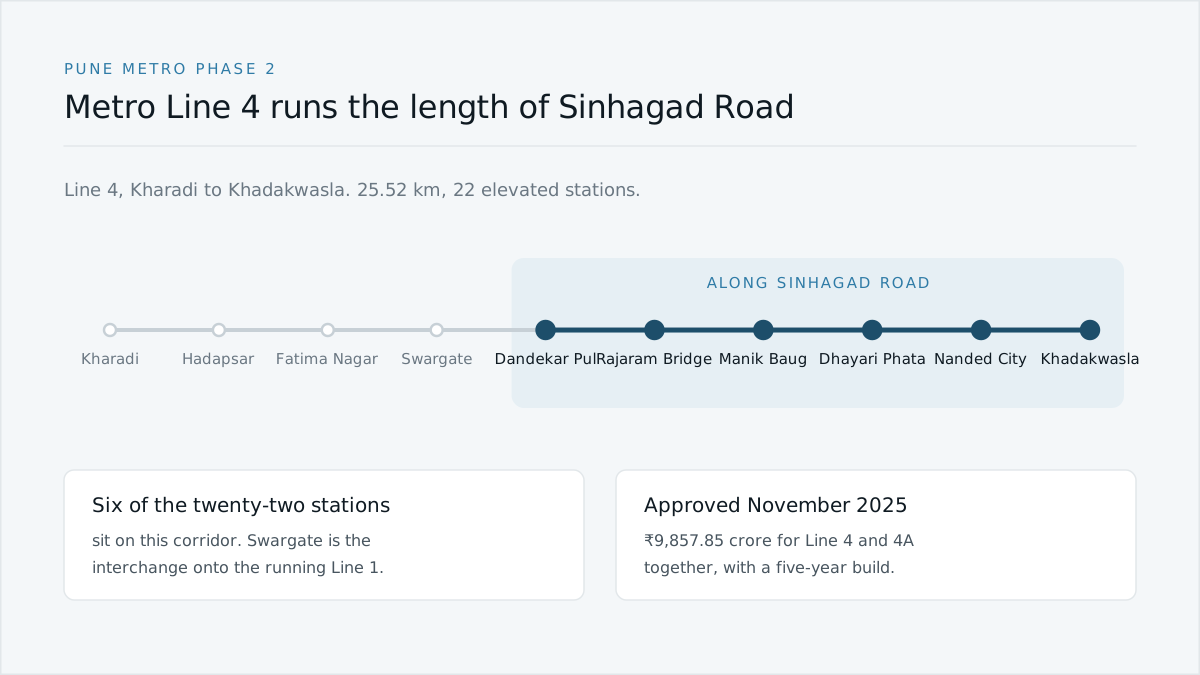
Sanctioned by the Union Cabinet in November 2025. Kharadi to Khadakwasla, 25.52 km, 22 elevated stations, six of them on this road, with a five-year build.
Sanctioned is real. It is not a train. But there is one detail that pushes it further along than most sanctioned lines: pillar foundations for the metro were built into the flyover works at Manik Baug and Hingane Khurd, at around ₹27 crore. Concrete in the ground on the alignment is a much stronger signal than an approval letter.
Sanctioned November 2025. Six of the twenty-two stations sit on this corridor, with the interchange onto the running Line 1 at Swargate. · Illustration
The three questions that follow
How far is the plot from it, actually? A station on your road and a station four kilometres up your road are different products. On Skydove this cannot be answered, because no address has been published. See the piece on that.
Who carries the delay risk? If you pay a premium today for a benefit in 2030, you do. The seller does not.
Does it help your journey? A line that runs east when you commute west is a good thing for resale and no help on a Tuesday morning.
The discipline
Value the address as it is today. Treat everything on rungs one to four as an option you were given for free, and be pleased if it arrives.
Buyers who do it the other way round pay today’s price plus the future benefit, and then wait for the benefit. On a fifteen-year hold that usually works out. On a five-year one it frequently does not, and the years in between are the ones you actually live through.
Maintenance, the sinking fund, and the bill that arrives in year twelve
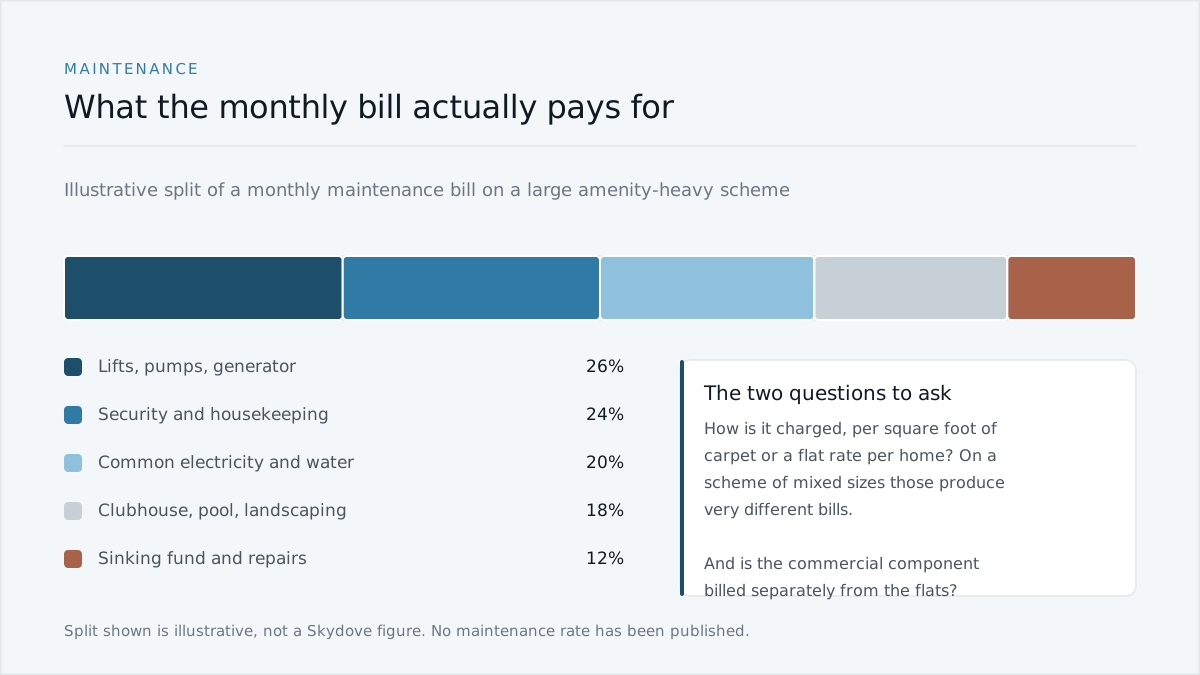
The monthly charge is negotiated for about ninety seconds during a booking. On a thousand-home scheme with a clubhouse and six parking levels, it is the second largest cheque you will write.
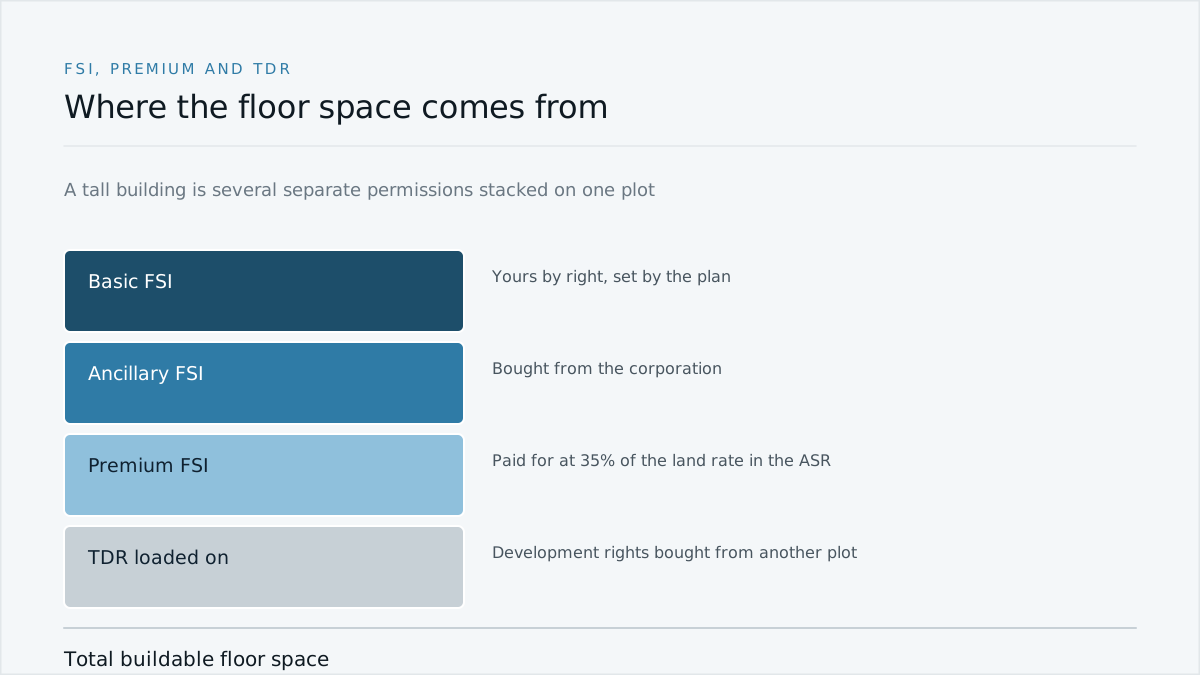
Where the floor space comes from: FSI, premium and TDR
How does a seven-acre plot hold 1,050 homes across eleven towers? Not by right. A tall building is four separate permissions stacked on one piece of land.
Letting a flat on a college road: the market nobody models
The rental arithmetic on Sinhagad Road is not the arithmetic on an IT corridor. Different tenant, different lease length, and a gap in the middle of every year.